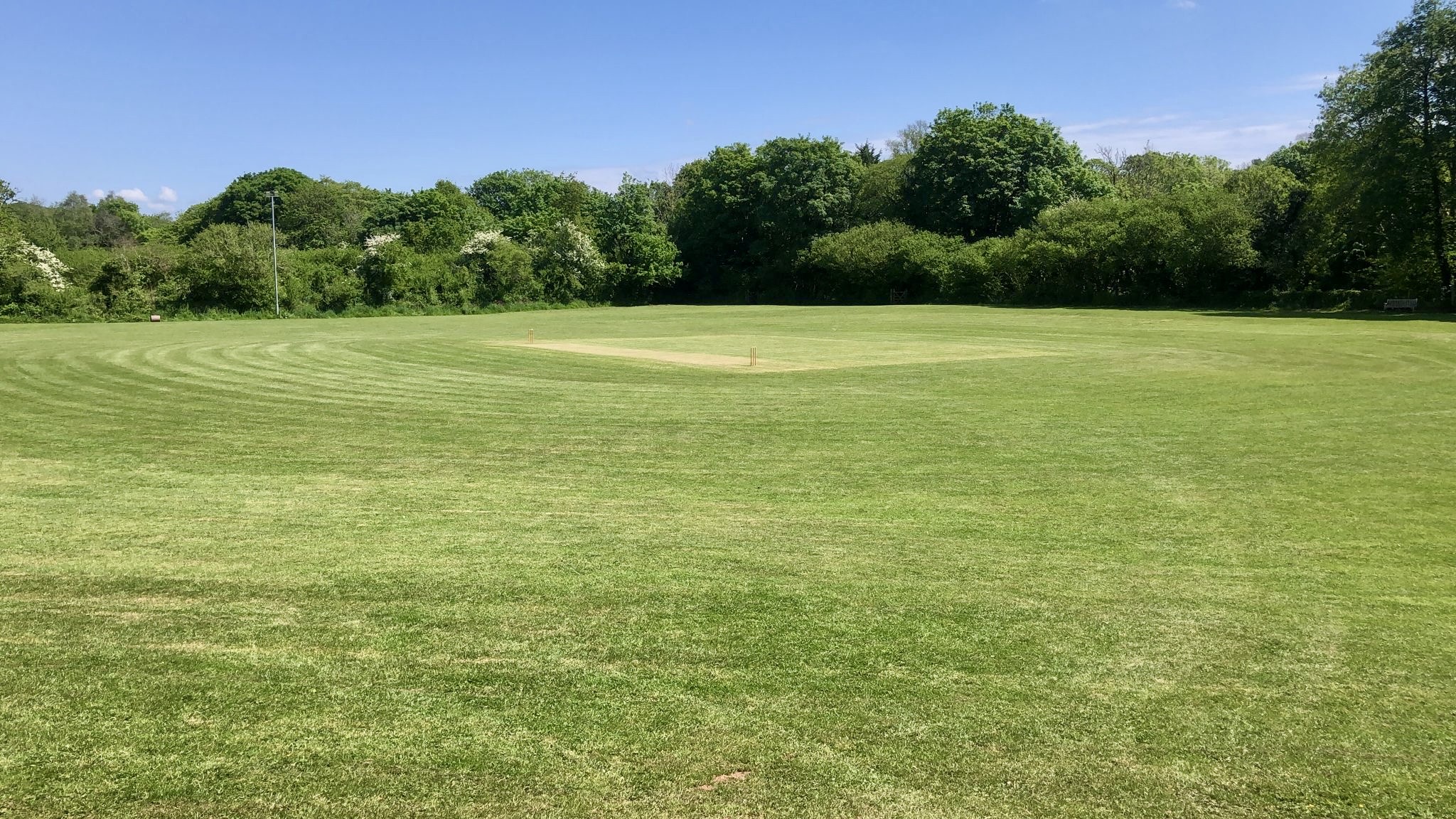
Sunday’s match against Ugborough had most of the essential ingredients of proper village cricket: warm sunshine, a brisk wind, sharp catching, brave batting, one or two wounded hands, and a tea that may yet be mentioned in parish records. The result, alas, went Ugborough’s way by 10 runs, but the afternoon offered plenty for Modbury to enjoy.
On a distinctly blustery afternoon at Modbury, Ugborough batted first and made 141 all out, their final wicket falling on the very last ball of the 30th over. Modbury, in reply, came agonisingly close, reaching 131 from their 30 overs and falling just 10 runs short of what would have been a fine chase.
Modbury took to the field with purpose, and it did not take long for the first breakthrough. Paul Romney opened proceedings with a sharp catch in the early exchanges — around the third or fourth ball, when some spectators were still settling into their chairs and others were attempting to work out whether the wind was merely brisk or actively personal.
From there, the catching rather set the tone. After the butter-fingered episodes of recent weeks, Modbury’s fielders appeared to have remembered that catches are, in fact, permitted. Mark Trevethan produced a graceful slow-motion dive, the sort of effort that seemed to unfold over several geological periods but ended very nicely indeed. Daniel Clayton, not to be outdone, spent much of the innings hurling himself around the field in pursuit of anything that dared pass within range. Even James Cruj, posted on the boundary and perhaps finding regular standing insufficiently stimulating, began adding a few voluntary dives of his own, presumably to keep warm, entertained, or both.
With the ball, Callum “The Viking” Lee-Oldfield was the pick of the attack, claiming four wickets in an excellent spell. Having been cruelly denied a wicket on debut the previous week, when a catch rebounded off a knee rather than into willing hands, the Viking might have been forgiven for casting a suspicious eye over every fielder within a thirty-yard radius. This time, though, the catches stuck, justice was done, and he wore the look of a man whose longship had finally come in.
John “Captain” Compston also enjoyed a productive spell, taking three wickets, including one sharply caught off his own bowling. Unfortunately, this came at some personal cost, as he managed to hurt his other hand this week, having already contributed to the club’s growing catalogue of cricketing ailments. At this rate, the captain may soon need to be wrapped in cotton wool between overs and wheeled out only for tactical interventions.
Sam Collidge also chipped in with a wicket — possibly two, depending on which witness one consults and how much cake they had eaten by the time they were asked. In any case, Modbury kept plugging away, and when Ugborough’s final wicket fell on the last ball of the innings, the visitors had made a competitive but gettable 141.
Then came tea.
And what a tea it was.
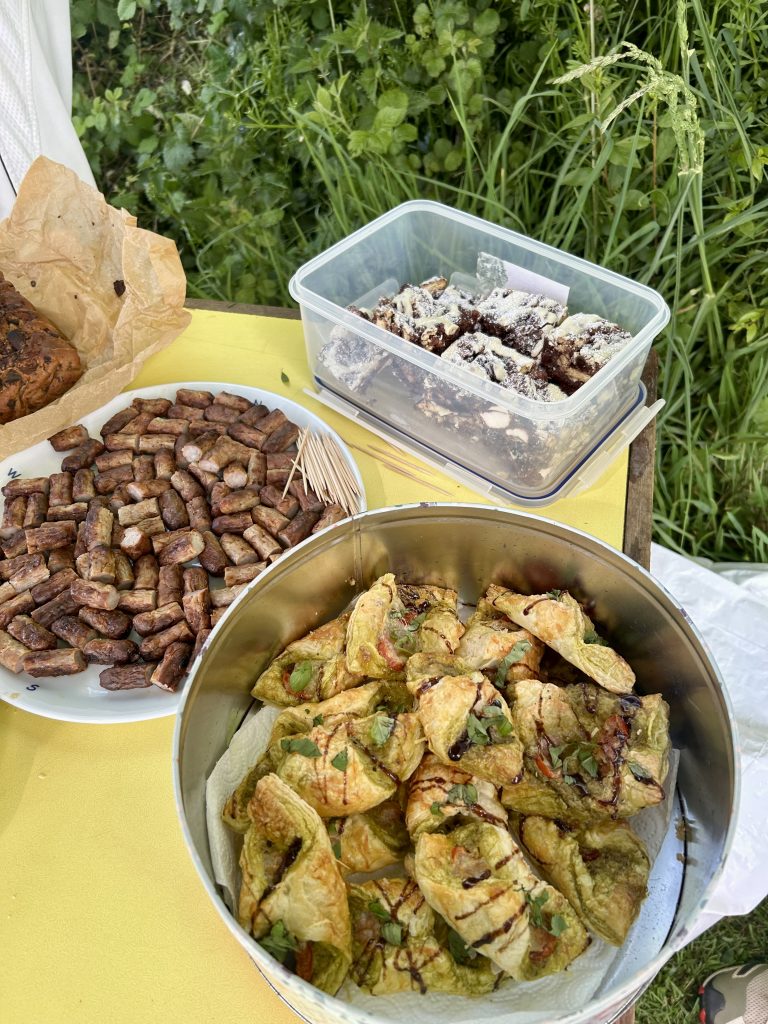
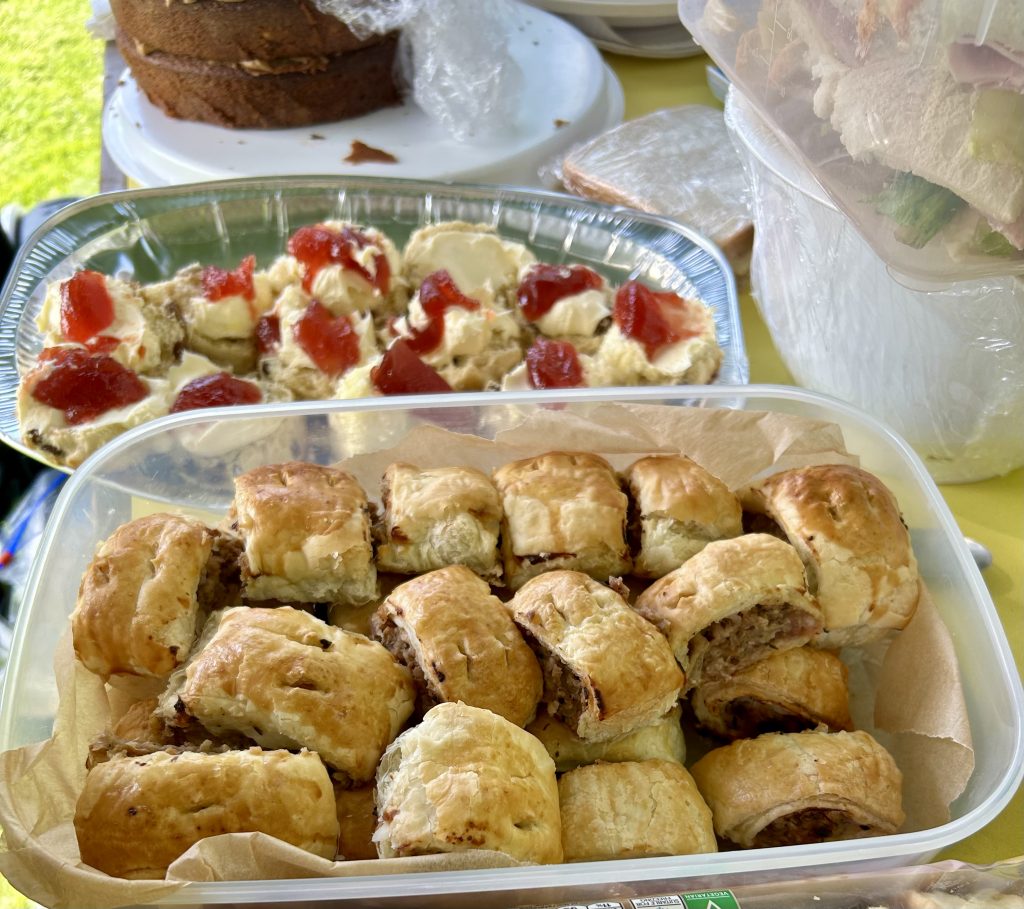
There are teas, and then there are teas that cause grown cricketers to fall briefly silent, remove their caps, and reassess their place in the universe. Homemade sausage rolls, pesto pastries, coffee cake, chocolate cake, Sticky Wicket Rocky Road, broccoli quiche, scones — the table groaned, the players hovered, and the general standard of human happiness rose several notches.
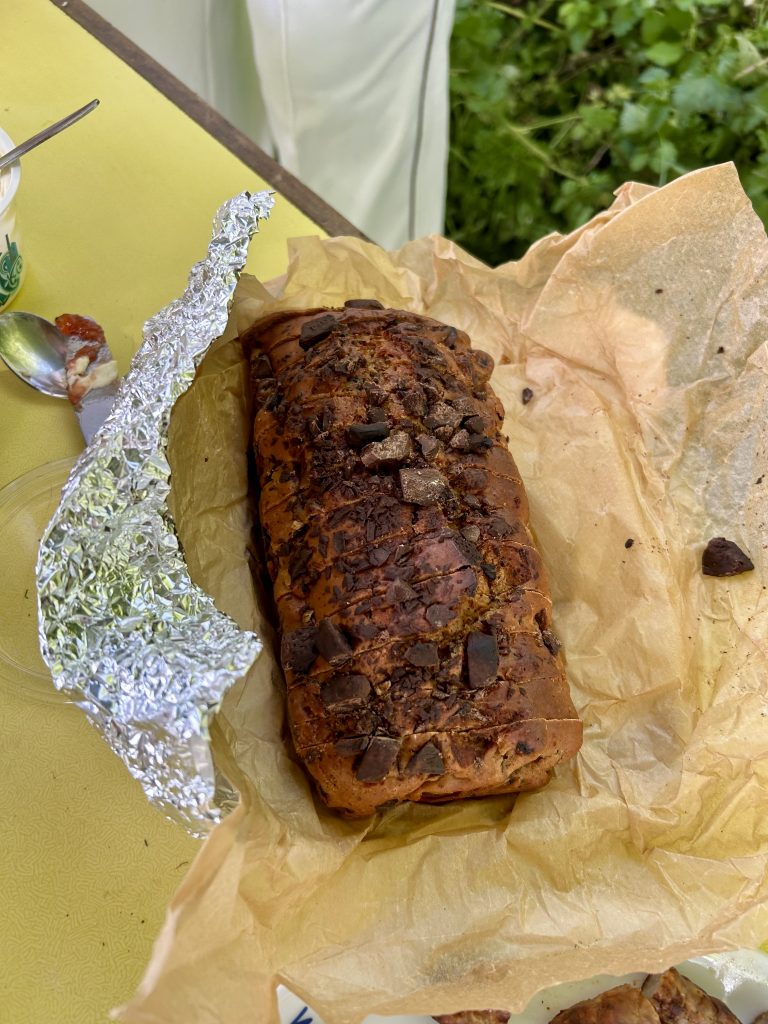
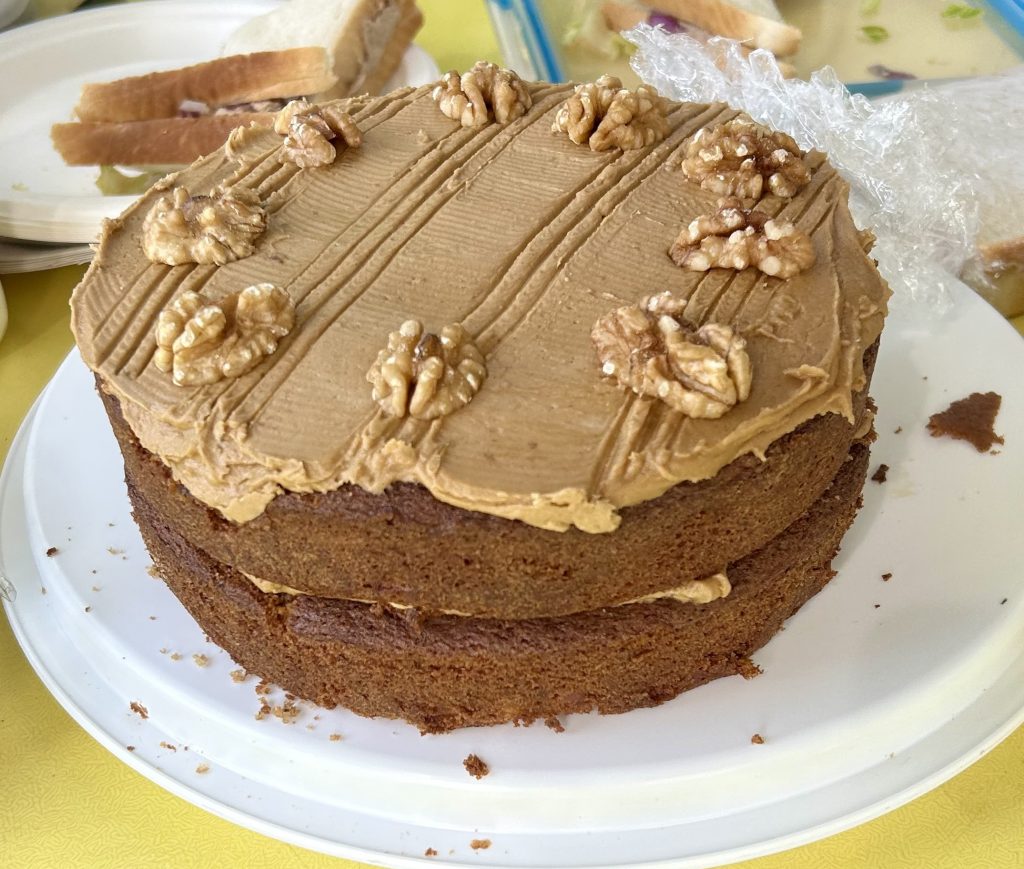
Cruelly, it was suggested that Howard “El Chappo” Williams should judge the best dish. This, however, placed him in an impossible diplomatic position, as his wife had made the Rocky Road. With the sort of statesmanlike wisdom rarely seen outside international peace conferences, Williams immediately delegated the responsibility elsewhere, thereby ensuring that whatever decision followed could not, in any meaningful sense, be blamed on him.
Ugborough, showing excellent taste and perhaps a dangerous degree of decisiveness, selected the sausage rolls and coffee cake as the standout offerings.
Suitably nourished, Modbury began their chase.
James Cruj and Dan Clayton opened the batting and gave the innings a sensible, steady start. For the first eight overs they batted with calm heads, careful shot selection, and the sort of quiet competence that makes scorers breathe more easily. It was not reckless, it was not frantic, and it gave Modbury a platform.
The middle order then began to move things along. John Compston struck the ball well, adding momentum and purpose to the chase just when Modbury needed it. Sam Collidge chipped in usefully too, keeping the scoreboard ticking and refusing to let the target drift entirely out of sight. Paul Romney, meanwhile, brought valuable stability, running plenty of singles and twos and doing the sort of unglamorous but vital work that rarely makes headlines but very often keeps a run chase breathing.
As the overs ticked by, Modbury remained in the hunt. The target was not disappearing over the horizon, but neither was it strolling politely towards them with a cup of tea and a scone. It needed someone to take the game on.
Enter, once again, Callum “The Viking” Lee-Oldfield.
Coming in at number nine, Callum produced a fine late-innings knock, striking the ball cleanly and dragging Modbury right back into contention. The exact figure may be lost to the Norse mists, but the effect was clear: Ugborough were made to look anxiously at the scoreboard, the field spread, and the game suddenly felt very much alive.
James Sloman then arrived with a refreshingly clear philosophy. Running, he appeared to decide, was not for him. The plan was simple: hit a six or go home. He went home. But one must admire a man with a plan, even if the plan is the cricketing equivalent of putting all one’s savings on a horse called “Probably Not”.
With five overs remaining, Howard “El Chappo” Williams joined Lee-Oldfield in the middle. The equation was stiff but not impossible, and the pair chipped away as best they could. Callum kept swinging, Williams kept surviving, and for a brief spell there was the tantalising possibility of a famous Modbury finish.
But Ugborough held their nerve. The runs required proved just beyond reach, and Modbury closed on 131, ten runs short.
It was a cracking game of village cricket: competitive, good-spirited, full of effort, and decided by fine margins. Modbury will rue a few moments, as all cricket teams do, but there was much to enjoy — excellent bowling from Callum and John, sharp catching across the side, a sensible start with the bat, late resistance from the lower order, and a tea of such quality that several players may still be thinking about the sausage rolls.
A loss, yes. But a very respectable one. And, in the grand Modbury tradition, one played with spirit, warmth, humour, and just enough absurdity to keep everyone honest.
Addendum: The Labours of El Chappo
It would be remiss — and, frankly, poor historical practice — to conclude this report without some mention of Howard “El Chappo” Williams, who, with the restraint and dignity of an elder statesman, has left the full account of his own deeds until the end. This is partly modesty, partly editorial balance, and partly a reward for those readers stout-hearted enough to have continued this far.
First came the catch.
To say it belied his frame would be putting it mildly. The ball came travelling towards him at what, to the untrained eye, may have looked like a gentle canter, but which to Williams appeared very much to be approaching the speed of sound. It rose above him, hung there briefly, and then began its descent.
What followed will, in time, pass into club folklore.
Williams sprang upwards with the lithe athleticism of a startled salamander. Around the ground, fielders braced themselves. Some turned away. Others shut their eyes entirely, expecting the familiar soft thud of opportunity meeting turf. But when they opened them again, the world had altered. The sun still shone. The wind still blew. And there, against all known precedent, stood El Chappo — ball in hand.
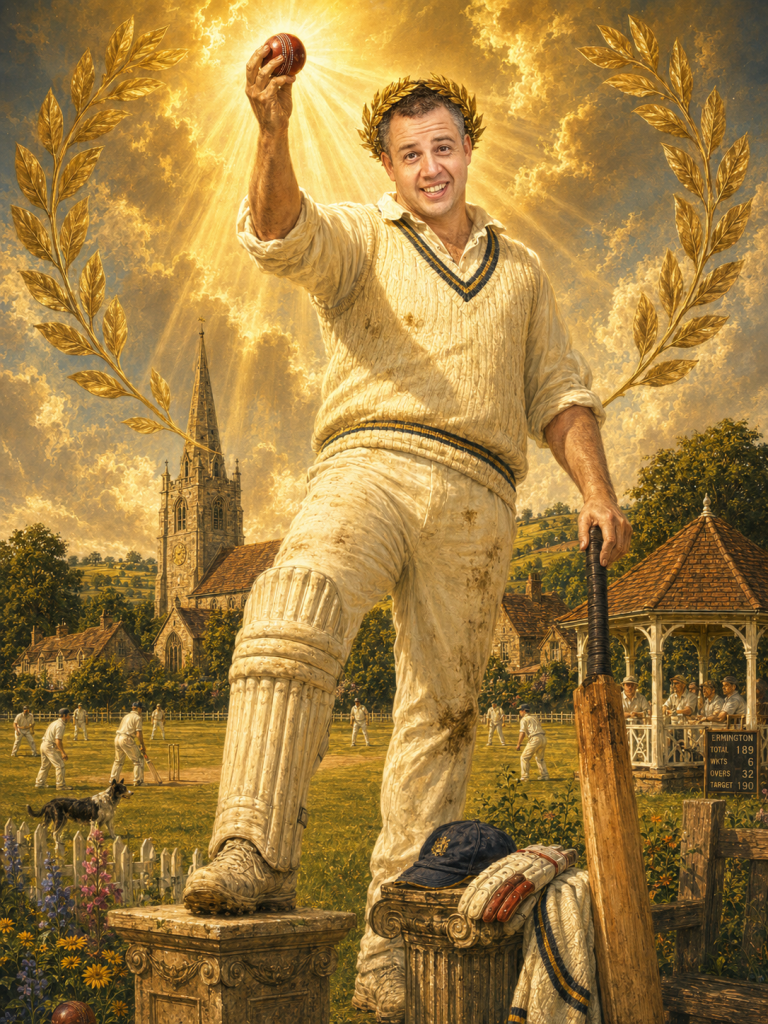
Apollo had his bow. Hercules had his club. Howard Williams had taken a catch.
Then came the batting.
With five overs remaining and the match still just about alive, Williams strode to the crease with the expression of a man heading not so much to the middle as into Greek myth. His first swing was of the full Homeric variety: large, brave, and not noticeably connected to anything in the physical world. On the boundary, team-mates watched through their fingers.
But then came contact. Real contact. The kind of contact that makes a man glance towards the pavilion as if expecting a laurel wreath and perhaps a small marble bust. A single was taken. It may, in another age, have been two, but there was a general feeling that the best interests of Modbury Cricket Club were served by returning the Viking to strike as quickly as possible.
A couple more runs followed over the remaining overs, each greeted internally by Williams with the sort of quiet rapture more commonly associated with mountaineers reaching a summit, or Odysseus finally reaching Ithaca and discovering, with profound relief, that he had somehow kept his wicket intact.
Those who regularly make thirties and forties may never quite understand the thrill available to a man more accustomed to ducks: the joy of staying in, the drama of a scrambled single, the almost indecent exhilaration of a two. To survive at the crease is no small thing. To survive, score, and leave unbeaten is, frankly, the stuff of legend.
To the casual observer it was five not out. To Williams, it was a small epic in whites.
A catch, a not-out, a new personal high score, and an excellent tea.
Some men have had worse afternoons.
Leave a Reply